

How Is the Non Woven Suit Cover Applied in Everyday Garment Protection?
2025-12-25
Abstract
Non Woven Suit Cover products are widely adopted in apparel storage, retail display, garment transportation, and long-term wardrobe management. This article explains how Non Woven Suit Cover solutions function, how specifications influence performance, and how they align with evolving garment protection standards. Through structured analysis, parameter breakdowns, and frequently asked questions, the content clarifies why this category remains a stable and scalable solution in global garment supply chains.
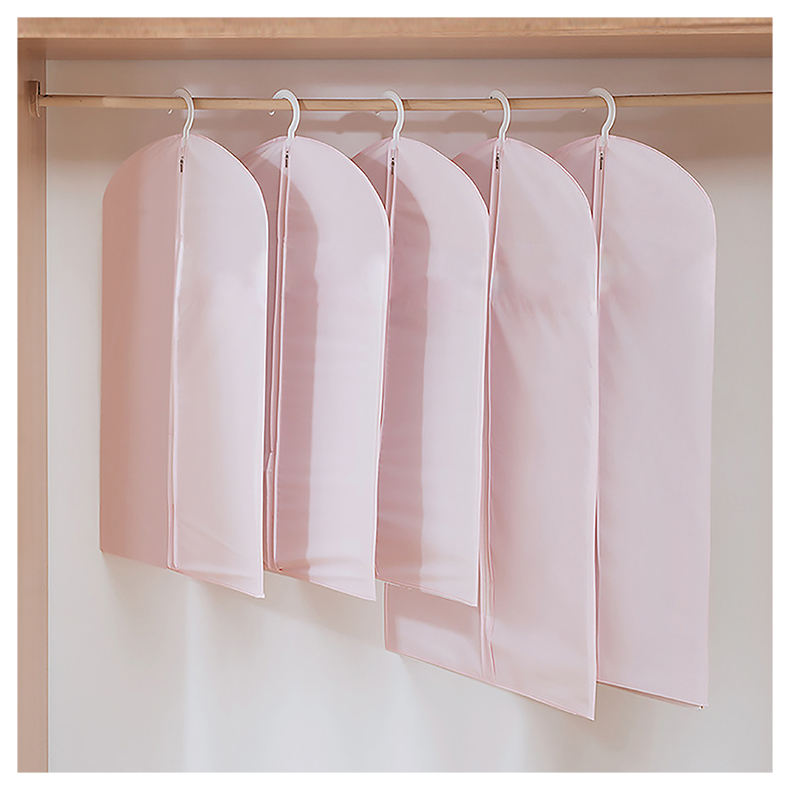
Table of Contents
- How Does a Non Woven Suit Cover Protect Garments?
- How Are Product Specifications Defined for Non Woven Suit Covers?
- How Should Non Woven Suit Covers Be Selected for Different Scenarios?
- How Is the Non Woven Suit Cover Market Evolving?
- How Do Common Questions About Non Woven Suit Covers Get Answered?
How Does a Non Woven Suit Cover Protect Garments?
A Non Woven Suit Cover is designed to safeguard garments from dust, moisture accumulation, surface friction, and environmental exposure during storage or transport. Manufactured from polypropylene non woven fabric, the structure allows controlled airflow while preventing particulate intrusion. This balance reduces odor retention and minimizes fabric stress over extended storage cycles.
In professional garment environments such as fashion retail, tailoring studios, and logistics hubs, suit covers must maintain garment form while remaining lightweight and easy to handle. The non woven structure supports breathability without compromising tensile integrity, making it suitable for repeated handling.
The core objective of a Non Woven Suit Cover is not compression but preservation. By forming a protective barrier that does not trap humidity, the garment retains its original drape, color stability, and surface finish.
How Are Product Specifications Defined for Non Woven Suit Covers?
Product parameters play a decisive role in determining suitability for various garment categories. The following table outlines commonly adopted technical specifications used across commercial Non Woven Suit Cover production.
| Parameter | Specification Range | Application Relevance |
|---|---|---|
| Material Composition | 100% Polypropylene (PP) | Ensures breathability and structural stability |
| Fabric Weight | 60–120 GSM | Controls durability and drape support |
| Standard Length | 90–150 cm | Accommodates suits, coats, and dresses |
| Closure Type | Zipper / Open Bottom | Supports ease of access and ventilation |
| Color Options | White, Black, Grey, Custom | Aligns with brand presentation standards |
These parameters allow buyers to align cover selection with garment weight, storage duration, and handling frequency. Higher GSM fabrics are commonly selected for logistics and long-distance transportation, while lighter options suit retail display and wardrobe storage.
How Should Non Woven Suit Covers Be Selected for Different Scenarios?
Selection criteria vary according to operational context. In retail environments, visual consistency and smooth zipper operation are prioritized. In logistics, tear resistance and seam reinforcement become central considerations.
For long-term storage, airflow management is essential. Non woven fibers create micro-gaps that allow moisture vapor transmission while blocking dust. This characteristic differentiates non woven covers from plastic alternatives, which may trap condensation.
Size calibration is equally important. Covers that are too tight may distort garment shoulders, while oversized covers reduce protective efficiency. Standardized length options support scalable procurement for uniform garment categories.
How Is the Non Woven Suit Cover Market Evolving?
The global garment accessories market continues to emphasize reusable, lightweight, and logistics-friendly packaging solutions. Non Woven Suit Cover products align with these requirements due to their balance of durability and material efficiency.
Manufacturing trends indicate increasing demand for customizable formats, including logo printing and modular sizing. Distribution channels now integrate garment protection as part of brand presentation rather than a purely functional component.
From a supply chain perspective, non woven materials support high-volume production with consistent quality metrics. This predictability reinforces their adoption in standardized apparel workflows.
How Do Common Questions About Non Woven Suit Covers Get Answered?
How long can garments be stored in a Non Woven Suit Cover?
Garments can be stored for extended periods provided they are clean and dry before storage. The breathable structure minimizes moisture buildup, which supports long-term preservation.
How does a Non Woven Suit Cover differ from plastic garment bags?
Non woven covers allow airflow and reduce condensation risk, while plastic bags create sealed environments that may trap humidity and odors.
How should Non Woven Suit Covers be maintained?
Covers can be gently cleaned with a damp cloth and air-dried. Repeated machine washing is not recommended, as it may affect fiber integrity.
How Does Brand Integration Influence Non Woven Suit Cover Selection?
As garment presentation standards evolve, brand-aligned packaging has become part of the overall customer experience. Non Woven Suit Cover solutions from Green Harmony are developed with attention to material consistency, dimensional accuracy, and scalable customization.
By integrating production control with garment industry requirements, Green Harmony supports apparel businesses seeking reliable protective solutions that align with operational workflows.
For organizations evaluating garment protection strategies or seeking tailored Non Woven Suit Cover specifications, direct consultation ensures alignment with storage, retail, and logistics objectives. Contact us to explore product configurations and application guidance designed for professional garment management.